Launching private label cat litter is one of the fastest ways for pet retailers, e-commerce sellers, and distributors to own more margin and brand equity—without investing in a factory. Instead of simply reselling national brands, you define the positioning, choose the formula, and control how the product looks and feels on the shelf.
Partners like MiiCat make this practical even at early volumes. As a manufacturer specializing in bentonite, tofu, mineral, and blended litters, and backed by a top-tier bentonite source, MiiCat supports brands from first idea to regular container shipments, so you can focus on marketing and sales while they handle formulation and production.
Below is a step-by-step view of how to build private label cat litter from scratch—what decisions to make, what to ask your OEM partner, and how to keep quality and compliance under control as your line scales.
🧭 Decide why you want private label cat litter (and for whom)
Before you pick a formula or bag design, be clear on why you want private label cat litter and who it should serve. A few common strategies:
- Margin expansion: You want a higher gross margin than branded SKUs while staying competitive on shelf price.
- Assortment control: You need exclusive products for your stores, marketplace shop, or subscription program that cannot be price-matched easily.
- Positioning gap: Your market is missing a specific option—eco-friendly tofu, extra-strong clumping, or low-dust formulas for sensitive homes.
Define your primary target: value-focused multi-cat homes, premium eco buyers, shelters, or convenience shoppers online. This will guide everything from the base material to the pack size.
An OEM partner like MiiCat can help you translate that target into a concrete brief—what absorption and clump behavior your customers expect, how important dust is, and whether a natural story (like tofu or wood pellets) fits your brand. Starting with a clear goal stops you from “collecting” random SKUs that don’t sell through.
🐾 Choose the right litter type and performance profile
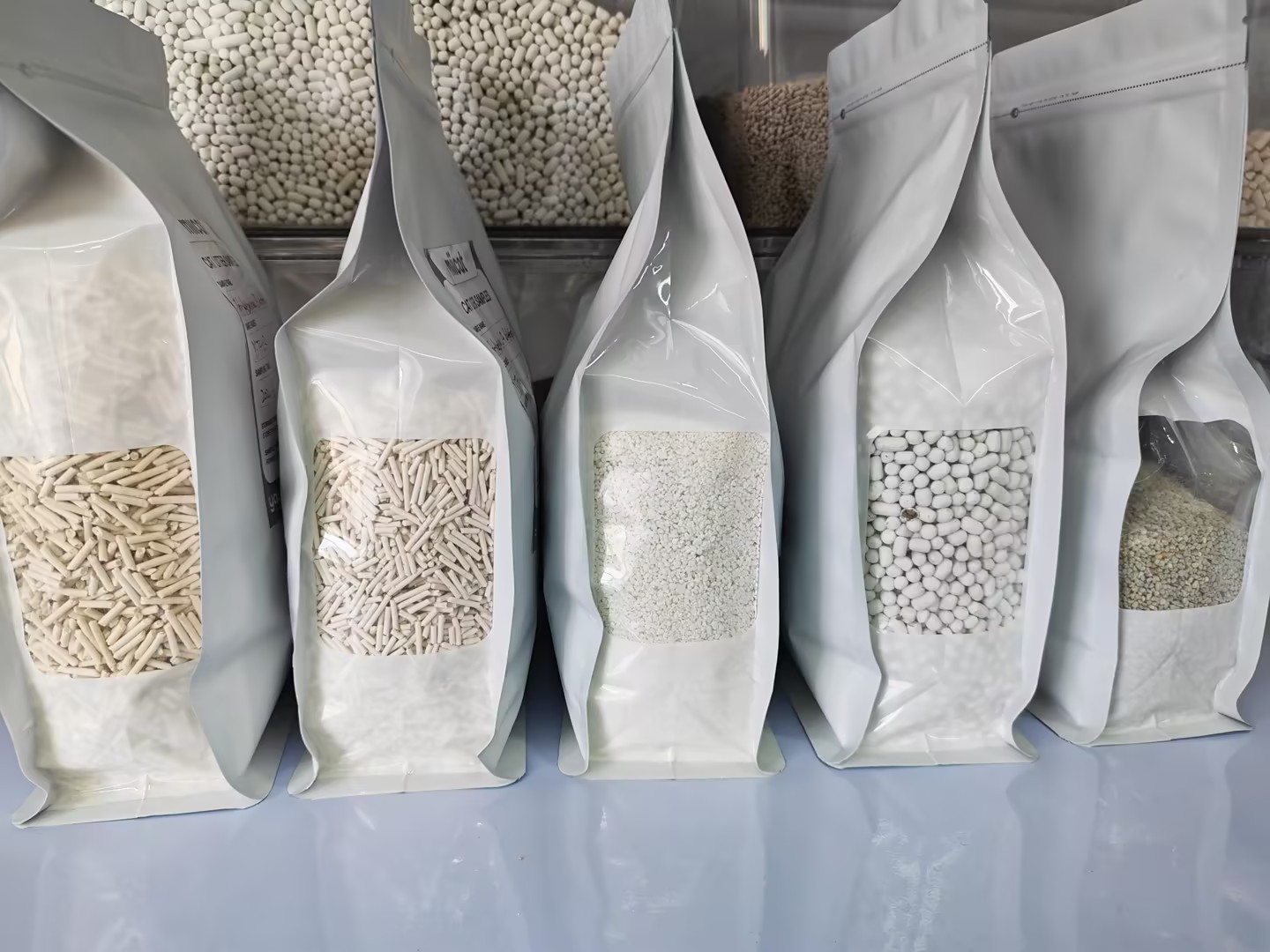
Next, you need to choose what’s actually in the bag. Most private label cat litter programs start with one or two hero SKUs:
- Bentonite clumping litter: Strong, familiar clumps, good odor control, and excellent value. Ideal for mainstream “everyday” products.
- Tofu or soy-based litter: Lightweight, fast absorption, and strong eco appeal. Often used as a premium tier.
- Wood pellets or mineral blends: Lower tracking, natural feel, and a different look for specialty retailers.
- Hybrid blends: Bentonite mixed with tofu or other minerals to balance performance, weight, and cost.
Because MiiCat produces all of these types, it’s easier to design a laddered range—one bentonite hero for volume, one tofu or blended SKU for eco-minded buyers—without managing multiple factories.
Once you’ve picked the base type, define the performance profile in practical terms:
- How fast should it clump?
- How firm should clumps be after 10–15 minutes?
- How much dust is acceptable when pouring?
- Do you want unscented as the default, or a light fragrance?
Turning these expectations into measurable targets (like absorption per 100 g, dust percentage by sieve, or clump integrity after a timed test) gives your manufacturer something concrete to work with and makes future quality checks much easier. MiiCat can help convert these ideas into lab methods and sample ranges you can test at home or in shelters.
🏭 Find an OEM partner who can grow with you
A reliable OEM is the backbone of any private label cat litter brand. When you evaluate manufacturers, look beyond first price and samples:
- Capacity and scalability: Monthly output per line, lead times, and peak-season plans. Can they handle your growth if a retailer rollout doubles demand?
- Multi-material expertise: Experience with bentonite, tofu, and blends under one quality system. This lets you add SKUs later without starting from zero.
- Testing and documentation: In-house lab, method-named COAs (moisture, PSD, dust, clump tests), and retains for each lot.
- Export experience: Familiarity with Incoterms, shipping documents, and destination requirements.
Manufacturers like MiiCat are structured specifically for private label and OEM/ODM work. They can develop custom formulas, support multi-language labels, and advise on bag sizes that cube out containers efficiently. That combination—R&D support plus export logistics—reduces the risk that your project stalls between “nice idea” and reliable supply.
When you shortlist vendors, ask each one to walk you through an actual batch record and a recent export shipment. You want to see how quality is checked from raw materials to pallet wrap and how traceability works if a complaint appears months later.
🎨 Design packaging, branding, and compliance together
Once the formula direction is set, private label cat litter becomes a branding and packaging exercise: how the product looks, what it promises, and how well it survives real-world handling.
Key questions to answer with your manufacturer:
- Pack sizes and formats: 5–10 L for convenience, 10–12 L or 20–25 lb for multi-cat homes, larger sacks for shelters.
- Bag material: Poly film, kraft-look laminated bags, or premium matte finishes. Film thickness must match route length and stacking needs.
- Closure system: Simple heat seal, zipper, or valve depending on price point and customer expectations.
- Visual identity: Color palette, icon system (clumping, low dust, eco-friendly), and photography style that match your master brand.
An experienced OEM like MiiCat can share dielines, recommend film structures, and suggest carton or pallet configurations that protect the product without wasting space. Because MiiCat works with multiple international markets, they can also help you align labels with typical requirements: language rules, recycling icons, country of origin, and basic safety statements.
Make sure regulatory information is baked into your design from day one. If you plan to sell in the EU or in states like California, work with your manufacturer to ensure SDS, REACH awareness, and any necessary warnings (like Prop 65 for certain additives) are ready before launch.
🚀 Launch, pricing, and long-term optimization
With formula, packaging, and compliance aligned, you’re ready to bring your private label cat litter to market. Start with a focused launch:
- One hero clumping SKU for volume (often bentonite), plus
- One premium upgrade (tofu, pellets, or a blend) for eco- or convenience buyers.
Price each tier relative to branded competitors: your hero SKU should feel like strong everyday value; your premium line should justify a step up with clear benefits (less dust, lighter to carry, natural story). Because manufacturers like MiiCat can quote multiple volumes and Incoterms, you can model realistic landed costs and set prices that protect margin from day one.
After launch, treat your OEM partner as part of your optimization loop. Share sell-through data, reviews, and complaint trends with the MiiCat team so they can tune dust levels, fragrance strength, or packaging details where needed. Schedule regular check-ins to review OTIF performance, QC results, and any planned changes in formula or film.
As the line grows, you can add sizes or segments (for example, a “multi-cat” variant or a softer tofu formula for kittens) without reinventing the base. With a stable partner like MiiCat, most of the heavy lifting—raw-material control, lab testing, and export logistics—remains consistent while your brand story evolves on top.
Bottom line: Building private label cat litter from scratch is less about copying a national brand and more about designing a system—clear positioning, the right litter type, a scalable OEM like MiiCat, and packaging that travels well from factory to shelf. If you define performance in measurable terms, bake compliance into your design, and work closely with a manufacturer who can prove both capacity and quality discipline, you can launch a litter brand that earns trust from retailers and pet parents while steadily improving your own margins.


