Distributors rely on stable, repeatable kitty litter supply to protect retail margins, avoid customer complaints, and scale private-label lines. Picking the right kitty litter manufacturer is not just about low bulk pricing—it hinges on rigorous QC systems, batch-to-batch product consistency, flexible packaging customization, clear MOQ tiers, and full import compliance documentation. This guide breaks down every core evaluation metric for wholesale distributors, includes a ready-to-use product specification template, outlines a standardized sampling workflow, and invites qualified partners to request full price sheets and test samples.
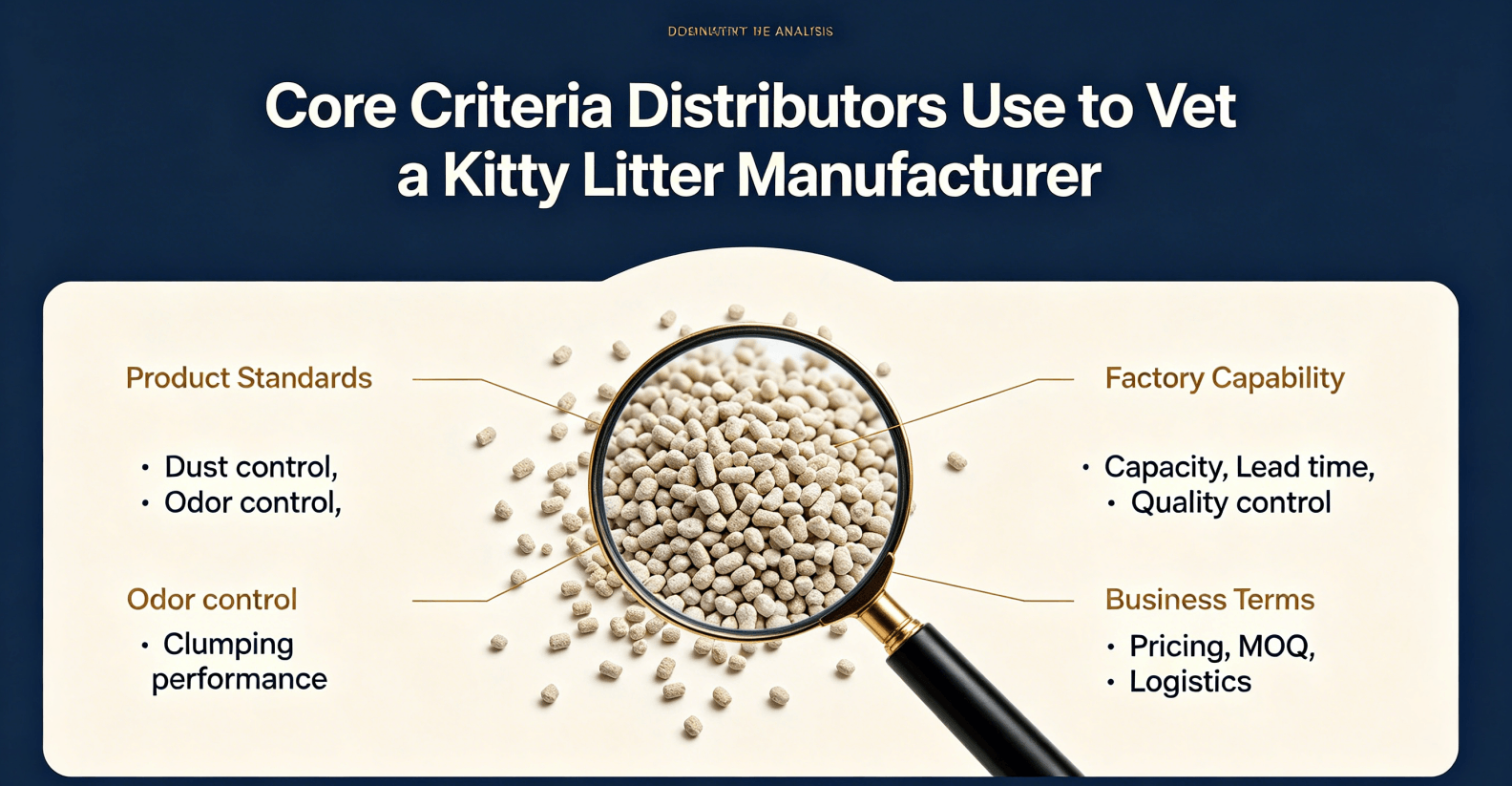
🧭 Core Criteria Distributors Use to Vet a Kitty Litter Manufacturer
Every distributor’s top priority is eliminating supply risk and inconsistent product performance, which erode shelf trust and trigger costly returns. Four non-negotiable benchmarks separate reliable factories from inconsistent vendors: integrated quality control systems, uniform batch consistency, adaptable packaging options, and complete cross-border compliance paperwork.
1. End-to-End QC System & Stable Batch Consistency
Consistency is the single most valuable asset for distributors selling kitty litter across regional retail chains, pet shops, and online marketplaces. A qualified kitty litter manufacturer builds quality checks into every production stage, not only final finished goods inspection.
- Raw material incoming QC: Test bentonite clay moisture, plant fiber purity, silica gel absorption capacity; screen for heavy metals, excess fine dust, and unapproved chemical additives before production starts.
- In-line production monitoring: Track drying temperature, granule sizing sieve filters, fragrance dosing, and packaging film thickness in real time to prevent formula drift between batches.
- Finished goods AQL inspection: Mandatory tests for clump integrity (10–15 minute soak), dust emission, odor control performance, water absorption speed, and net weight accuracy per retail pack.
- Batch retention rules: Manufacturers must seal and store reference samples from every production run for a minimum of 12 months to resolve post-delivery quality disputes quickly.
- Consistency guarantee: Trusted factories run fixed raw material ratios and locked production parameters, so distributors avoid seasonal shifts in dust levels, clumping strength or granule shape that lead to consumer complaints.
- ✅ Do: Ask factories to share third-party lab test reports covering 3 consecutive production batches to verify long-term consistency.
• ❌ Don’t: Partner with manufacturers that skip batch retention or only offer one-off lab certificates without repeat test data.
2. Customizable Packaging Choices for Multi-Channel Distribution
Distributors serve diverse sales channels, from big-box retail to independent pet boutiques and subscription marketplaces—your manufacturer must support flexible packaging sizes, structures, and branding to match all shelf requirements.
Standard Retail Pack Sizes (Universal Distributor Lineup)
Bentonite clay: 5kg, 10kg, 20kg woven/PE bags
Plant-based tofu/corn/cassava litter: 6L, 10L, 15L, 20L laminated bags
Silica crystal litter: 3.8L, 7.6L sealed valve bags
Custom Packaging Functional Options
- Bag structures: Zipper tops, one-way moisture exhaust valves, carry handles, tear notches for easy opening
- Materials: PE plain film, PP woven sack, food-grade multi-layer laminate, anti-moisture barrier film for humid destination markets
- Outer transit cartons: Custom stack height limits, protective corner guards, vented panels, pallet label printing, multi-language outer box markings
- Private label branding: Custom dieline artwork, full-color printing, multi-lingual ingredient labels, origin country marking, barcode & QR code integration
Channel-Specific Packaging Tips
Mass-market distributors prioritize cost-efficient plain printed bulk bags; premium private-label partners require matte/foil laminated packaging with custom scent indicator granules printed on packs.
• ✅ Do: Confirm the factory can adjust bag thickness and carton strength based on your ocean freight transit route to cut down in-transit damage.
• ❌ Don’t: Lock in packaging specs without testing a small pilot run—thin film or weak cartons create high shrinkage costs during shipping.
3. Transparent MOQ Tiers for Distributor Growth
Manufacturer minimum order quantities directly impact a distributor’s cash flow, trial inventory risk, and ability to launch new private-label SKUs. Top kitty litter manufacturers offer tiered MOQs tailored to new and established wholesale partners:
- Trial pallet MOQ: Low-volume pallet-sized orders for first-time distributors to test market demand without full container commitment
- Standard FCL MOQ: Full 20GP / 40HQ container minimum for standard unbranded bulk kitty litter, unlocking the lowest per-unit landed cost
- Private label OEM MOQ: Separate tiered minimums for custom printed packaging, custom fragrances, and adjusted granule formulas (smaller minimums available for repeat long-term distributors)
- Volume discount scaling: Clear sliding price breaks as monthly tonnage commitments increase, ideal for distributors expanding into multiple regional territories
- ✅ Do: Negotiate mixed-SKU FCL MOQs to combine bentonite, tofu and crystal litter in one container for balanced inventory.
• ❌ Don’t: Accept rigid fixed MOQs with no trial pallet option—this limits your ability to test new product lines before large capital commitments.
4. Full Set of Import Compliance Documentation
Cross-border distribution hinges on complete, audit-ready compliance documents; missing or incomplete certificates delay customs clearance, incur port storage fees, and risk cargo seizure. Reputable kitty litter manufacturers supply all required paperwork per destination market standard:
- SDS (Safety Data Sheet): Full chemical safety breakdown for clay, plant and silica litter variants
- COA (Certificate of Analysis): Batch-specific performance test results for absorption, dust, heavy metal levels
- Origin Certificate: For tariff duty reduction and import declaration
- Third-party lab test reports: Biodegradability, flushability, heavy metal, dust and clumping verification
- Factory audit certificates: ISO, BSCI, and pet product safety inspection records for retail chain vendor onboarding
- Shipping documentation: Packing list, commercial invoice, container loading photos & seal records per shipment
- ✅ Do: Confirm all documents can be issued in your target market’s official trading language (English, Spanish, German etc.).
• ❌ Don’t: Proceed to production if a manufacturer cannot provide pre-production sample compliance certificates for your import country rules.
🧪 Recommended Kitty Litter Product Specification Table (For RFQ & Factory Alignment)
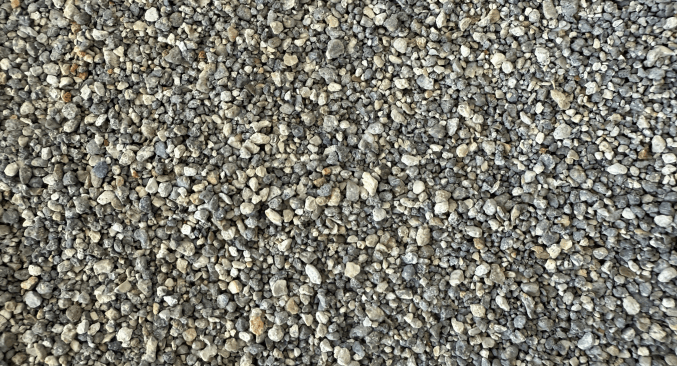
Share this standardized spec sheet template with manufacturers to receive equal, comparable quotes for distributor bulk orders:
- Base Material Category
- Core Performance Targets
- Granule Physical Specs
- Additive Rules
- Retail Packaging Specs
- Outer Carton & Pallet Rules
- Compliance Requirement Checklist
- Order Volume Terms
📦 Standard Sampling Process for Distributors (Step-by-Step Workflow)
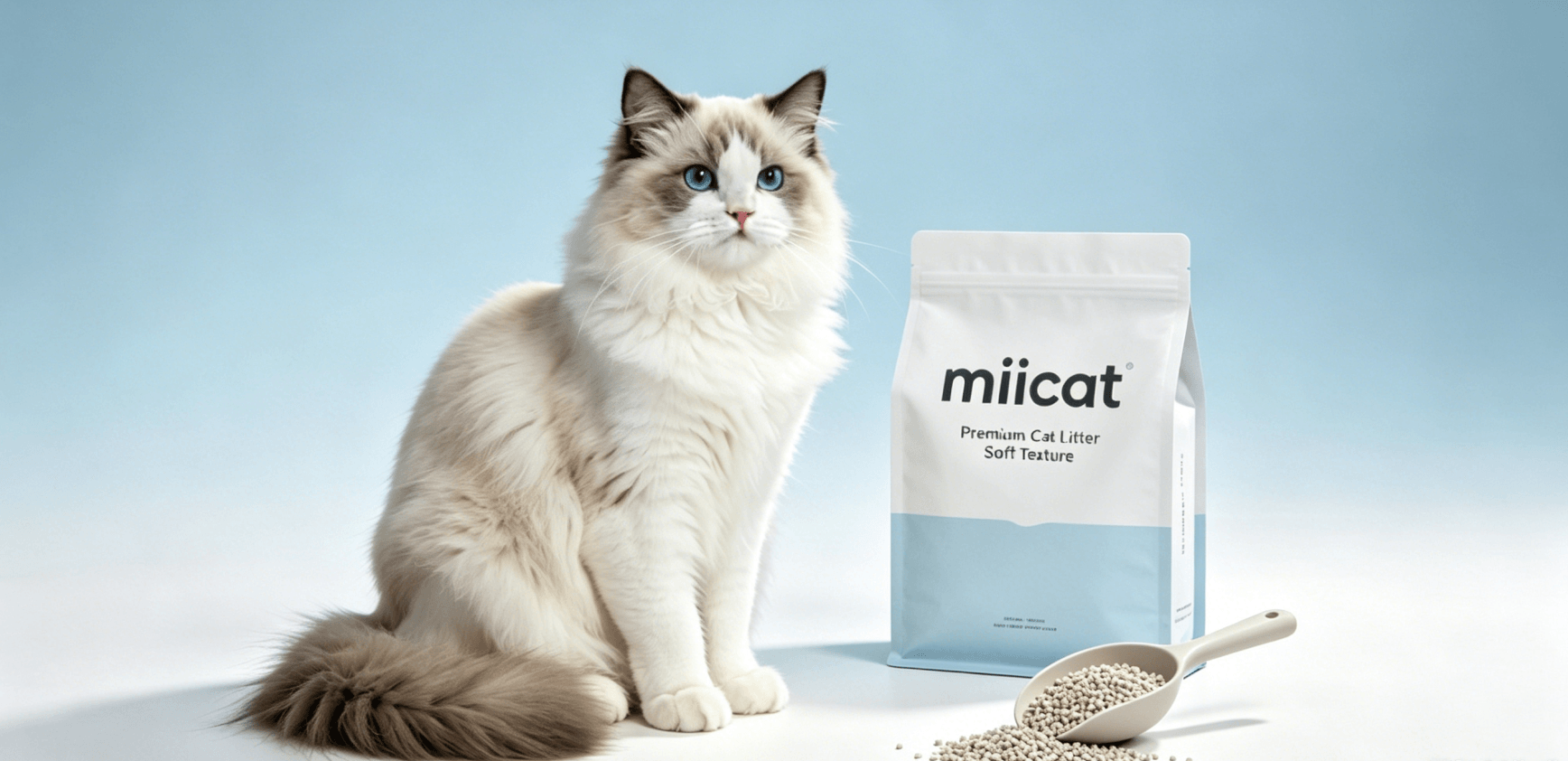
A structured sampling process eliminates mismatched expectations before large bulk orders and validates factory QC consistency:
- Spec Confirmation: Distributor submits full product specification sheet to the kitty litter manufacturer to lock formula, granule and packaging parameters.
- Lab Bench Sample Dispatch: Factory sends 4–5kg lab raw samples of the agreed litter variant for in-house performance testing (clumping, dust, odor).
- Pilot Packaging Sample Run: If lab samples pass internal review, the manufacturer produces complete finished retail packs with draft private label artwork to test bag seal strength, print quality and shelf appearance.
- 7–10 Day Field Trial: Distributor runs real-world testing with cat households or retail test locations to evaluate tracking, long-term odor control and consumer feedback.
- Golden Sample Sign-Off: Both distributor and manufacturer seal, date and archive an official golden reference sample; all mass production batches must match this benchmark.
- Pre-FCL Trial Pallet Shipment (Optional): New distributors can order a small trial pallet matching golden sample specs to validate transit packaging durability and real warehouse handling before full container production.
- • ✅ Do: Attach signed golden sample photos to every purchase order for batch quality cross-checking.
• ❌ Don’t: Approve mass production without formal golden sample confirmation—any post-production formula changes will be costly to resolve.
🚚 Final Playbook for Distributor Sourcing Success
The most profitable distributor partnerships with a kitty litter manufacturer balance four pillars: consistent QC protocols, flexible channel-ready packaging, tiered low-risk MOQs, and complete cross-border compliance paperwork. Avoid vendors that cut corners on batch testing, limit packaging customization, or fail to provide full import certification—short-term cheap pricing leads to long-term losses from customer returns, customs delays and inconsistent retail stock performance.
Before committing to large-volume FCL orders, verify product performance via the standardized sampling workflow above and align all technical expectations using the shared specification table to guarantee apples-to-apples supplier comparisons.
Request Samples & Custom Price List
If you are a wholesale distributor, regional pet chain buyer or private-label brand operator sourcing reliable kitty litter supply, contact our professional kitty litter manufacturer team today. We provide free test samples matching your custom spec requirements, full tiered bulk price lists broken down by pallet and FCL MOQ, complete OEM packaging design support, and all market-required compliance documents to streamline your import process.


