Sourcing bentonite cat litter directly from China manufacturers cuts middleman costs, enables private label customization, and secures stable bulk shipments for importers, pet product distributors, online marketplace sellers, animal shelters and chain retailers. However, inconsistent raw material sources, loose production standards and unclear technical indicators often lead to batch deviation, excessive dust, fragile clumps and container cargo damage during long-distance ocean transport. This guide lays out a complete evaluation system for B2B buyers to audit Chinese bentonite cat litter factories, standardize core technical specs, formalize sampling & trial order workflows, confirm MOQ and lead time rules, and lock mandatory compliance documents.
🧱 Core Factory Evaluation 1: Raw Material Sourcing & Ore Grade Audit
The fundamental quality of bentonite cat litter hinges entirely on ore sourcing, which is the first checkpoint to filter unqualified manufacturers.
Top-tier Chinese bentonite cat litter factories source sodium-based bentonite from major ore deposits in Liaoning, Inner Mongolia and Shandong—core producing zones that guarantee high montmorillonite content, strong water absorption and natural clumping performance. Low-cost workshops often mix calcium bentonite or recycled waste mineral powder to slash costs, resulting in slow absorption, loose clumps and heavy dust.
Mandatory verification items:
- Request ore origin certificates and mineral composition test reports to confirm sodium bentonite purity ≥95% and montmorillonite content above 70% for standard grade products.
- Confirm whether the factory owns cooperative open-pit mines or stable long-term ore supply contracts; factories without fixed raw material channels will face unstable quality and price fluctuations.
- Check formula additives: clarify the proportion of activated carbon, zeolite, fragrance and antibacterial ingredients, and forbid unlabeled chemical binders that may irritate cat respiratory tracts.
✅ Require batch-wise raw material incoming inspection records before production starts;
❌ Avoid suppliers that refuse to disclose ore sources and only provide vague bulk pricing without ingredient proof.
📏 Core Factory Evaluation 2: Granule Size Distribution (PSD)
Particle shape and size directly determine dust volume, liquid wrapping effect and anti-tracking performance, and must be quantified instead of described as “round balls” or “coarse grains”.
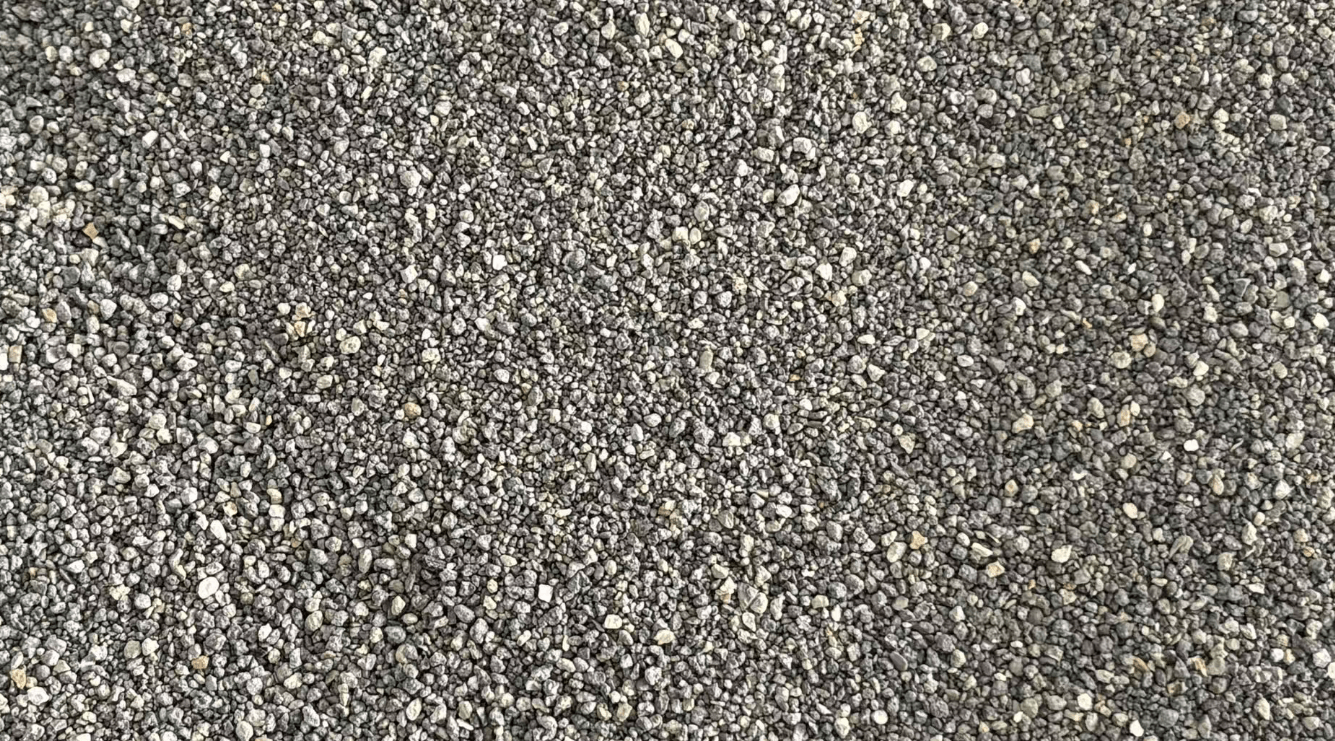
- Standard round bentonite litter mainstream spec: 1.0mm–3.0mm sieved granules, with oversized particles (>3.5mm) below 3% and fine powder dust (<0.3mm) strictly controlled within agreed limits.
- Irregular broken bentonite litter: set PSD range via 2-layer sieve testing to prevent over-crushing which spikes dust.
- Customization support: factories can adjust particle fineness for premium low-tracking lines or coarser particles for economy bulk lines.
- Every Certificate of Analysis (COA) must attach complete PSD sieve screening data. Factories with enclosed conveyor belts and cyclone dust removal systems deliver far more stable particle consistency than open-air processing workshops.
💧 Core Factory Evaluation 3: Moisture Content Control
Moisture is the decisive factor for clumping stability and transit spoilage.
- Standard qualified bentonite cat litter moisture target: 6%–9% with ±0.5% tolerance (single-digit narrow range).
- Too low moisture (below 5%): bentonite loses activation, clumping delay occurs, and dust surges sharply during packaging and transportation.
- Too high moisture (above 10%): products cake inside bags, stick together in pallets, breed bacteria and mildew in humid shipping containers, and add extra weight to inflate freight costs.
- Specify unified testing methods in contracts: either oven drying constant weight testing or calibrated handheld moisture meter detection. Ban suppliers from deliberately boosting moisture to hit net weight standards at the expense of product quality.
🌫️ Core Factory Evaluation 4: Dust Level Quantified Standard
“Low dust” is an ambiguous marketing term; B2B buyers must set maximum dust percentage by weight.
- Entry-level bulk wholesale: dust ≤1.0%;
- Mid-to-high end export private label: dust ≤0.3%–0.5% via cyclone separation and secondary dust removal production lines.
- Key factory audit points: whether all material transfer links are fully sealed, if post-grinding dust separation procedures are fixed, and whether real-time dust monitoring is applied on production lines. Require sieve analysis dust test results attached to each batch COA for traceability.
⏱️ Core Factory Evaluation 5: Clumping Time Standard
Measure absorption speed with unified lab test conditions (standard saline solution simulating cat urine):
- Fast clumping premium grade: initial clump formation within 3–5 seconds after liquid contact;
- Regular commercial grade: initial clumping finished within 5–8 seconds.
- Define total liquid absorption capacity per 100g litter in writing; qualified sodium bentonite should reach absorption rate above 300% to avoid liquid leakage penetrating the clump and contaminating the litter box bottom.
🧪 Core Factory Evaluation 6: Clump Breakage & Structural Integrity
Shattered clumps during scooping are the top customer complaint for imported bentonite litter. Adopt standardized cohesion testing rules:
- Let formed clumps cure for 10–15 minutes to finish complete solidification;
- Conduct 30cm vertical drop test or sieve vibration test;
- Record the retained mass percentage of intact clumps after testing. Premium products require clump breakage rate below 10%.
- Factories that skip curing time testing and only do instant clump checks cannot guarantee end-user usability after packaging and long sea transit.
📦 Step-by-Step Sampling & Validation Workflow Before Mass Order
Follow this 5-step sampling mechanism to avoid costly full-container quality disputes:
- Pre-sample application: Submit detailed technical spec sheet to the factory, apply for 1–2kg free test samples (buyer bears international express freight normally).
- Lab preliminary testing: Inspect moisture, dust, particle size, clumping speed and breakage rate in your local lab; eliminate unqualified suppliers directly.
- 7–14 days real household trial: Distribute trial packs to end users, record tracking, odor control and daily scooping experience, keep photo records.
- Golden Sample confirmation: Lock the final approved sample, seal two identical copies stored by buyer and manufacturer respectively as the only production benchmark.
- Pilot small batch trial order: Place a pallet-sized mini trial bulk order before FCL full container shipment, verify packaging tightness, pallet loading and batch consistency on actual production lines.
✅ Freeze the golden sample with signature confirmation;
❌ Never proceed to formal orders relying only on verbal confirmation of random samples.
📋 MOQ & Production Lead Time Industry Standard for Chinese Manufacturers
Minimum Order Quantity
- Stock standard unbranded bulk bentonite litter: 1 metric ton MOQ; pallet mixing of multiple fragrances allowed within one container.
- OEM private label customized packaging & printed bags: Minimum 1 full 20GP container (12–14 tons); partial container orders carry higher unit pricing.
- Formula-customized litter (extra carbon, zeolite, exclusive fragrance): MOQ starts at 1×40HQ container for dedicated production line scheduling.
Lead Time Breakdown
- Ready-in-stock goods: 3–5 working days for packing and loading after deposit confirmation.
- OEM customized label & packaging: 7–12 working days for artwork confirmation + bag printing + production + loading.
- Large batch recurring orders (multiple containers): Production lead time fixed at 10–15 working days based on factory production scheduling and vessel booking plans.
- All lead times must be written into formal PO contracts with penalty clauses for delayed delivery.
📜 Mandatory Compliance & Qualification Documents Required from Factories
Request the below documents before signing cooperation contracts to pass customs clearance and local market access inspection in destination countries:
- Basic enterprise qualifications: Business License, Production License, ISO 9001 Quality Management System Certificate, ISO 14001 Environmental Management Certificate.
- Batch testing documents: COA (Certificate of Analysis) for every shipment covering moisture, PSD, dust, clumping performance, heavy metal detection.
- Safety compliance reports: MSDS Material Safety Data Sheet, SGS third-party heavy metal & harmful substance test report; EU clients need REACH registration documents; US market requires FDA mineral material compliance proof.
- Factory audit reports (for large chain buyers): BSCI or Sedex social responsibility audit certification for factory workshop management.
- Shipment traceability files: Loading photos, container seal number records, batch coding rules linking each pallet to inspection reports.
✉️ Ready-to-Use RFQ Template for B2B Buyers
RFQ Subject: RFQ – Bulk Bentonite Cat Litter China Factory Direct Supply & OEM Customization
1. Buyer Basic Info
Company Name:
Target Sales Market & Country:
Intended Order Volume (Monthly/First Shipment):
Required Trade Term (FOB Tianjin/Qingdao/Liaoning Port / CIF Destination Port):
2. Core Product Technical Specifications
- Raw Material: □ 100% Sodium Bentonite □ Mixed Formula with Carbon/Zeolite
- Particle Size Range: ____ mm
- Max Allowable Dust Content: ____ %
- Target Moisture Range: ____ % ± ____
- Required Clumping Time: ____ seconds
- Allowable Clump Breakage Rate After Drop Test: ≤ ____ %
- Fragrance Option: □ Unscented □ Lavender □ Coffee □ Custom Scent ____
3. Packaging Requirements
- Single Bag Spec: ____ KG / ____ L
- Bag Type: □ Plain Stock Bag □ OEM Printed Private Label Bag
- Outer Carton Spec: ____ Bags per Export Carton
- Pallet Standard: □ Euro Pallet □ Standard China Pallet; Stretch Wrap & Edge Guard Requirement: Yes / No
4. Order & Logistics Terms
- MOQ Confirmation Request:
- Production Lead Time After Deposit:
- Unit Price (Ex-Work / FOB Port):
- Payment Term (T/T 30% Deposit Before Production, 70% Against Copy of B/L):
- Sample Policy: Free Sample Yes/No; Express Freight Payer: Buyer/Supplier
5. Required Documents to Be Provided Per Shipment
☑ Batch COA
☑ MSDS
☑ SGS Third-Party Test Report
☑ Container Loading Pictures & Seal No.
☑ OEM Artwork Template Support
6. Additional Custom Demands
Odor control formula adjustment, anti-tracking optimization, container desiccant addition for humid shipping routes, seasonal production SOP etc.
7. Validity of Quotation
Quotation Valid For: ____ Days
Supplier Signature & Factory Stamp:
Date:
Final Key Reminders
Anchor all technical indicators, sampling rules, document obligations and delivery deadlines in formal Purchase Orders instead of informal emails. Track batch inspection data long-term to spot quality drifting before customer complaints arise. Reliable Chinese bentonite manufacturers will stick to the “specify → test → document → approve” closed-loop quality control, while unstable suppliers cut corners on raw materials and in-process inspection to compete on ultra-low pricing only. Always prioritize consistent batch quality over one-time bottom pricing for long-term import wholesale business.


