Launching a private label cat litter brand is more than putting your logo on a bag. For B2B buyers, importers, distributors, and pet-product retailers, a successful private-label program depends on choosing a proven formula, defining measurable product specifications, selecting practical packaging, and building a reliable production and shipping plan.
A professional cat litter manufacturer can help you move from product selection to samples, artwork approval, mass production, and shipment with fewer unexpected costs and delays.
This guide explains the key steps to launching your own private label cat litter line with MIICAT.
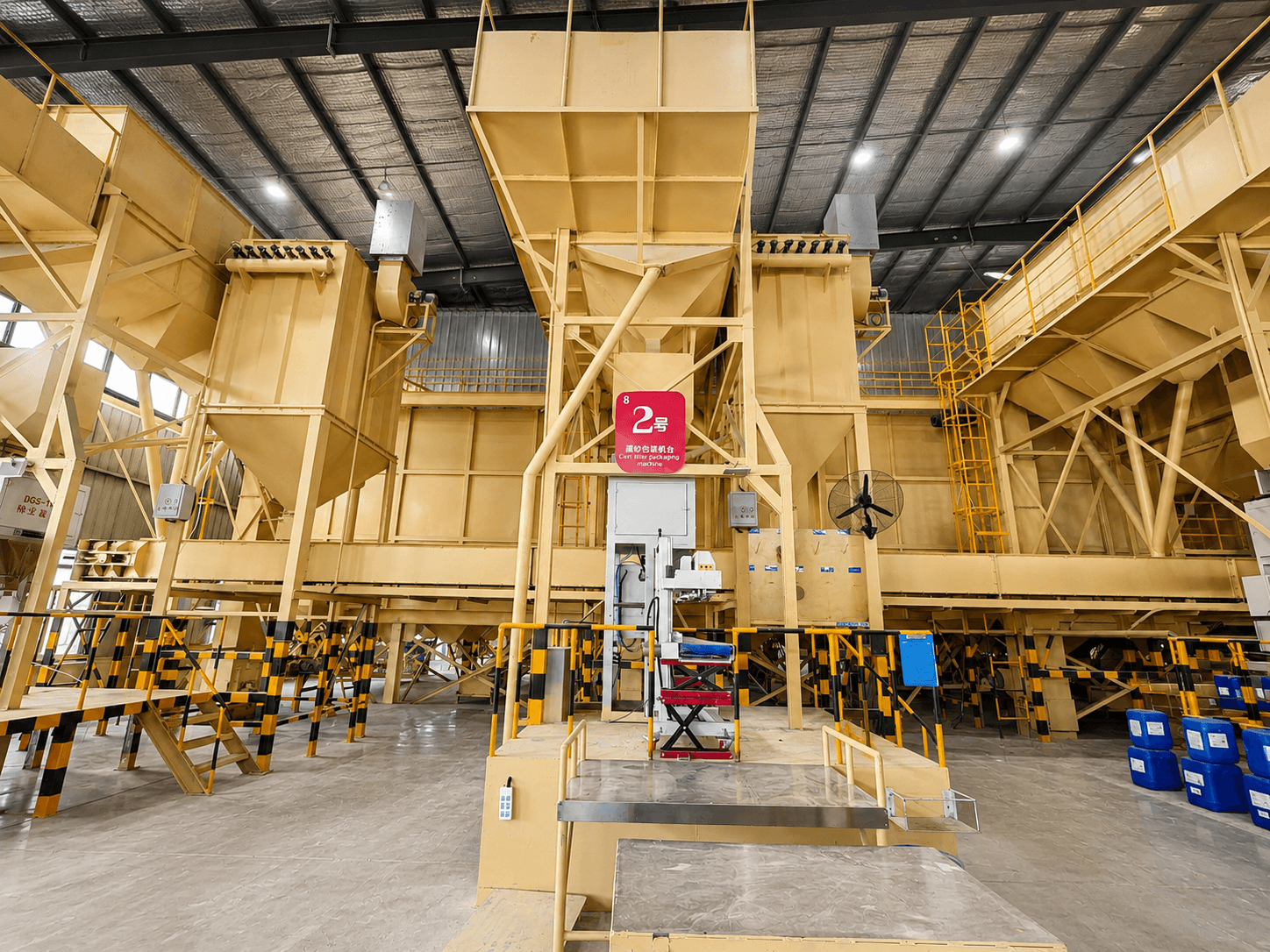
1. Start with a Proven Cat Litter Formula
The first decision is the product itself.
Instead of developing a completely new formula from scratch, most B2B buyers can launch faster by selecting a proven cat litter formula that has already been tested in regular production.
Depending on your target market and price positioning, common options include:
- Bentonite cat litter — strong clumping and absorption
- Tofu cat litter — plant-based and suitable for customers looking for biodegradable options
- Cassava cat litter — plant-based alternative with strong clumping performance
- Mixed cat litter — combines different materials or functional particles for specific performance requirements
The right formula depends on your market positioning.
For example, a mass-market product may prioritize competitive pricing and reliable clumping, while a premium product may focus more heavily on low dust, odor control, fast absorption, and specialized granules.
What should B2B buyers compare?
Before selecting a formula, ask your supplier for information about:
Raw material composition
Granule size
Absorption performance
Clumping performance
Dust level
Odor-control performance
Moisture content
Packaging options
Available testing or compliance documentation
The goal is to choose a formula that can be reproduced consistently from batch to batch—not simply a sample that performs well once.
2. Define Your Cat Litter Performance Specifications
Once you have selected the formula, turn your product requirements into clear specifications.
This is especially important for a private label cat litter project because the product specification becomes the reference point for samples, production, and quality control.
Clumping
For clumping cat litter, buyers should evaluate:
Clump formation
Clump strength
Clumping speed
Whether the clump breaks during scooping
How much clean litter remains attached to the clump
A strong clump makes daily cleaning easier and reduces unnecessary litter consumption.
Dust
Dust is another important specification for both consumers and retailers.
Instead of simply asking for "low dust," buyers should discuss a measurable dust requirement with the supplier.
For example, you can specify:
Dust level: ≤ X%
The exact specification should be agreed upon according to the selected formula, testing method, and target market.
Odor Control
Odor control can be achieved through different approaches, including:
Natural mineral properties
Plant-based materials
Activated carbon
Deodorizing particles
Fragrance or scented options
For private-label products, buyers should clearly specify whether the product should be unscented, lightly scented, or strongly scented, as well as the desired fragrance type.
3. Choose the Right Packaging Size
Packaging affects more than appearance. It directly influences product positioning, shipping efficiency, warehouse handling, and retail pricing.
Common packaging formats include:
| Packaging Option | Typical Application |
|---|---|
| Small bags | Convenience stores, online retail, trial purchases |
| Medium bags | Mainstream retail and e-commerce |
| Large bags | Multi-cat households and value products |
| Customized sizes | Private-label brands with specific market requirements |
When deciding on bag size, consider:
Target retail price
Consumer usage habits
Shipping weight
Container loading efficiency
Shelf space
Warehouse handling
Local market preferences
For example, a 5 kg product and a 10 kg product may use the same formula but target completely different customer groups.
4. Plan Pallet Patterns Before Mass Production
A common mistake in private-label projects is designing the packaging first and thinking about logistics later.
For B2B buyers, bag dimensions and pallet patterns should be considered together.
Your supplier should confirm:
Bags per carton, if cartons are used
Bags per pallet
Pallet dimensions
Number of layers
Bags per layer
Total pallet height
Gross weight per pallet
Container loading quantity
Floor-loading alternative
For example, changing the bag dimensions by only a few centimeters can affect how many bags fit on a pallet and how efficiently the container can be loaded.
Therefore, it is better to finalize the product specification + bag size + pallet pattern + container loading plan as one package.
5. Understand MOQ Tiers for Private Label Cat Litter
MOQ is one of the first questions most B2B buyers ask.
However, private-label MOQ is not always based only on the quantity of cat litter.
It can also depend on:
Product formula
Bag size
Packaging material
Printing method
Number of SKUs
Number of fragrances
Customized accessories
Pallet configuration
A practical way to structure your project is to discuss MOQ in tiers:
Trial / Initial Order
Suitable for:
New brands
Market testing
New distributors
E-commerce launches
The buyer can start with a limited number of SKUs and test consumer response.
Standard Private Label Order
Suitable for:
Established distributors
Regional retailers
Pet-product wholesalers
The buyer can optimize production and packaging costs with larger quantities.
Volume Program
Suitable for:
National distributors
Large retailers
Multi-market brands
Larger production quantities can help improve production efficiency and container utilization.
Important: MOQ should be confirmed with the manufacturer after the product formula, bag size, artwork, and SKU quantity are determined.
6. Sample and Approval Process
A professional private label cat litter project should have a clear sample approval process.
A typical workflow is:
Step 1 — Product Selection
Choose the cat litter type, formula, granule size, fragrance, and functional requirements.
↓
Step 2 — Sample Request
The supplier prepares samples for testing.
↓
Step 3 — Buyer Testing
Evaluate:
Clumping
Dust
Absorption
Odor control
Granule appearance
Fragrance
Packaging
↓
Step 4 — Specification Confirmation
Both sides confirm the final product specifications.
↓
Step 5 — Artwork Submission
The buyer provides the logo and packaging artwork.
↓
Step 6 — Artwork Proof Approval
Check:
Logo
Product name
Net weight
Ingredients/material information
Usage instructions
Warning statements
Barcode
Country-of-origin information
Other market-specific requirements
↓
Step 7 — Pre-Production Confirmation
Confirm the final sample, packaging, quantity, and production schedule.
↓
Step 8 — Mass Production
The factory starts production according to the approved specifications.
7. Compliance Documents You May Need
Compliance requirements vary depending on the destination country and product type.
Before placing an order, B2B buyers should ask the supplier which documents are available and which documents may need to be arranged specifically for the destination market.
Commonly requested documentation may include:
- MSDS / SDS
Product specification sheet
Certificate of Analysis (COA)
Raw-material information
Safety or laboratory test reports
REACH-related documentation where applicable
SGS or other third-party testing reports where applicable
Packaging and labeling information
Country-of-origin documentation
Not every document is required for every market.
The safest approach is to tell your supplier the destination country and sales channel first, then confirm the applicable compliance requirements before production.
8. From Artwork to Shipment: A Typical Timeline
A private-label project usually involves several stages rather than one single production deadline.
A typical workflow looks like this:
| Stage | Typical Timing* |
|---|---|
| Product selection | 1–3 days |
| Sample preparation | 3–7 days |
| Buyer testing & approval | Depends on buyer |
| Artwork preparation | Depends on buyer |
| Artwork review | 1–3 days |
| Packaging production | Depends on packaging |
| Mass production | Depends on order quantity |
| QC inspection | Before shipment |
| Container loading | After production/QC |
| Shipment | According to booking schedule |
*These are general planning references rather than guaranteed lead times. Actual timing depends on the formula, packaging, order quantity, artwork, and shipping schedule.
For this reason, buyers should not calculate the launch date based only on the factory's production time.
A better approach is:
Product approval → Artwork → Packaging → Production → QC → Loading → Shipment
Building the entire timeline at the beginning helps avoid unnecessary delays.
Private Label Cat Litter RFQ Template
If you want an accurate quotation from a supplier, don't simply send:
"Please send me your price for private label cat litter."
Instead, provide the following information.
Product
Cat litter type:
Formula:
Granule size:
Scent: Yes / No
Fragrance:
Target performance:
Special requirements:
Packaging
Bag size:
Net weight:
Packaging material:
Printing requirement:
Number of SKUs:
Number of flavors/scents:
Order
Estimated quantity:
Target MOQ:
First-order quantity:
Expected annual volume:
Logistics
Destination country:
Destination port:
Incoterm: FOB / CIF / FCA / Other
Palletized or floor loaded:
Preferred container: 20GP / 40GP / 40HQ
Compliance
Destination market:
Required certificates:
Required test reports:
Labeling requirements:
Commercial
Target price:
Target launch date:
Payment terms:
The more complete your RFQ is, the more accurately a manufacturer can calculate product cost, packaging cost, MOQ, container loading, and shipping arrangements.
Launch Your Private Label Cat Litter Brand with MIICAT
Launching a private label cat litter line does not have to mean developing a product from zero.
With a proven formula, clearly defined performance specifications, optimized packaging, and a well-planned production schedule, B2B buyers can build a cat litter product that is easier to manufacture, ship, and scale.
MIICAT provides cat litter solutions including bentonite, tofu, cassava, and mixed cat litter, together with private-label packaging and production support.
If you are planning to launch your own cat litter brand, send MIICAT your product requirements, bag size, target quantity, destination port, and packaging specifications.
Request private label cat litter samples and pricing from MIICAT today.


